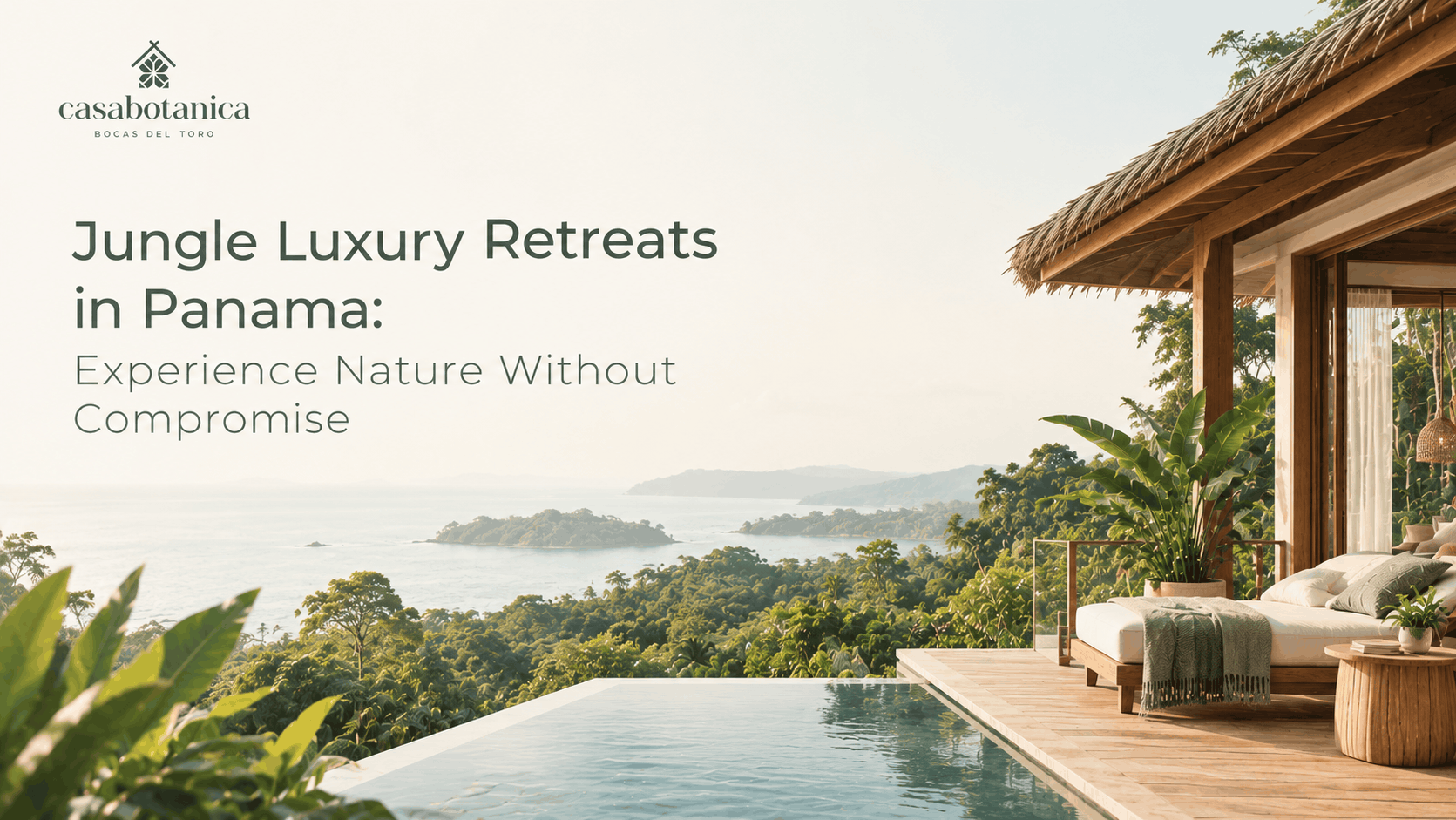
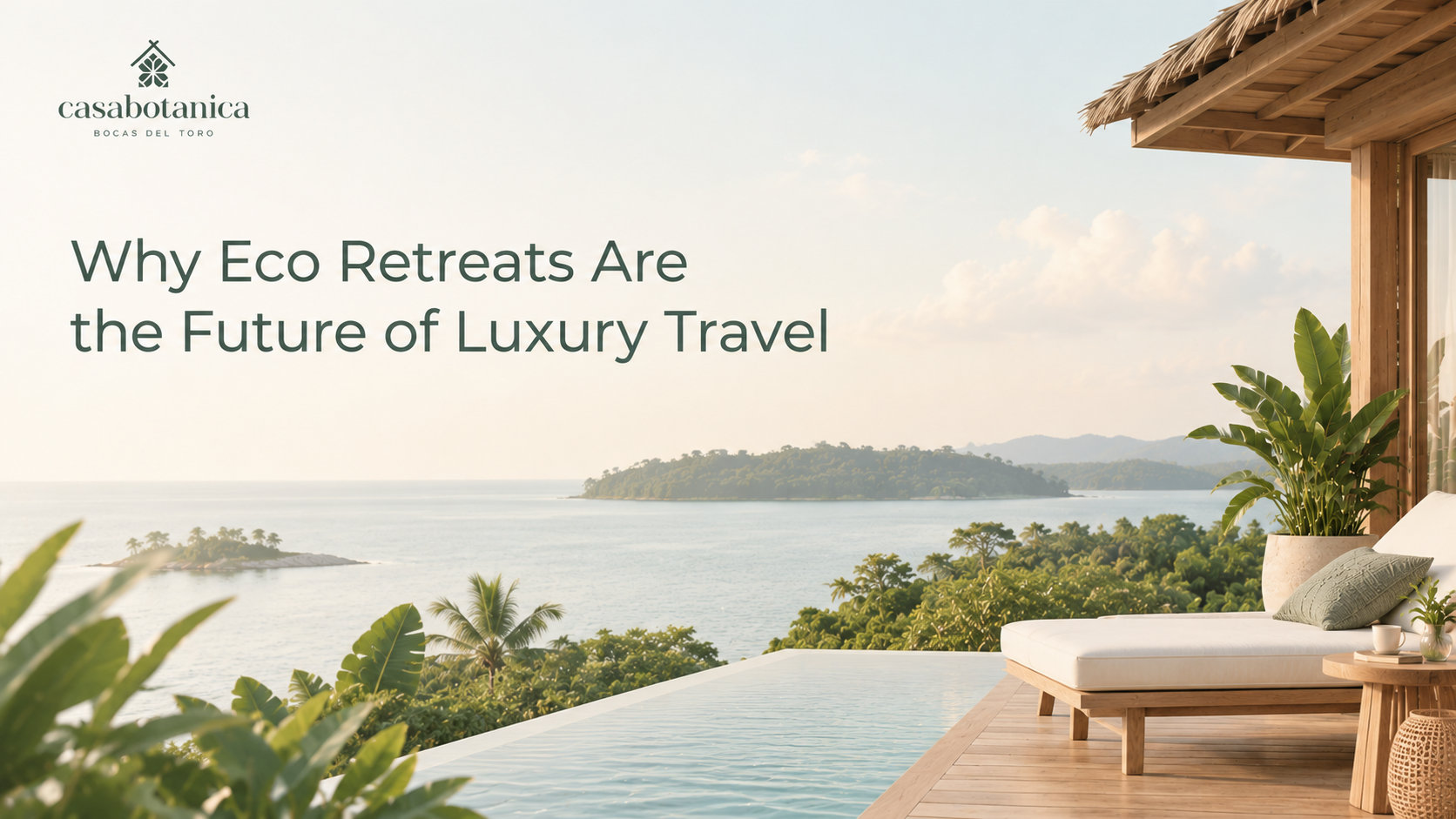
Picture two vacations in Panama. At one, you wake up in a busy resort, walk past rows of loungers, and join a breakfast buffet. At the other, you open your doors to a tropical garden, hear birds in the trees, and enjoy coffee beside your own pool.
Both can be comfortable. Both can feel luxurious. But they’re very different ways to spend a holiday.
If you’re exploring sustainable luxury accommodation in Panama, understanding the difference between an eco luxury villa and a traditional resort can help you choose a stay that fits your travel style, budget, and values.
And the biggest difference isn’t always what you’d expect.
What Is an Eco Luxury Villa?
An eco luxury villa is a private vacation property that combines high-quality comfort with thoughtful environmental practices and a close connection to its natural surroundings.
Unlike a standard vacation rental that simply offers an attractive location, a genuinely eco-conscious villa considers how the property is designed, maintained, and operated.
That may include natural ventilation, efficient water systems, locally sourced building materials, responsible waste management, and landscaping that supports the surrounding environment.
Luxury is still part of the experience. Guests may enjoy spacious bedrooms, private pools, outdoor lounges, modern kitchens, comfortable furnishings, and personalized services.
The difference is how these comforts fit into the place.
In tropical destinations like Bocas del Toro, Panama, a well-designed villa might use shaded outdoor areas and ocean breezes to make time outside more comfortable. The surrounding garden becomes part of the experience rather than something viewed through a hotel window.
Does Eco Luxury Mean Giving Up Comfort?
Not at all.
This is one of the biggest misunderstandings about sustainable travel.
Some travelers hear the word “eco” and imagine basic cabins, cold showers, or limited electricity. Those options exist, but they don’t define eco luxury.
A well-equipped villa can offer reliable internet, a beautiful pool, quality bedding, modern bathrooms, and helpful guest services.
The important question is whether those comforts are provided responsibly.
For example, a property with energy-efficient appliances and sensible water management can still feel indulgent. A naturally ventilated living area can be comfortable without needing constant air conditioning.
Of course, every property is different. You should always check which amenities are actually provided.
Eco Luxury Villa vs Traditional Resort: Key Differences
The simplest way to understand the difference is to compare how each property approaches space, services, sustainability, and the guest experience.
| Feature | Eco Luxury Villa | Traditional Resort |
| Accommodation | Private home or estate | Individual rooms or suites |
| Privacy | Often exclusive to one booking group | Most facilities shared with other guests |
| Design | May prioritize natural surroundings and efficient resource use | Often designed around large-scale guest facilities |
| Dining | Private kitchen, local restaurants, or arranged meals | Restaurants, buffets, and room service |
| Service | Personalized support based on the property | Standardized services with larger teams |
| Atmosphere | Quiet, residential, and nature-focused | Social, active, and structured |
| Activities | Independent exploration and private experiences | Organized excursions and on-site entertainment |
| Sustainability | Depends on verified operating practices | Depends on verified operating practices |
| Best suited for | Families, couples, groups, and privacy seekers | Travelers who prefer many on-site services |
Neither option is automatically better.
Some resorts have excellent environmental programs and strong conservation partnerships. Meanwhile, some villas use the word “eco” without providing meaningful evidence.
The difference comes down to how the property actually operates and what kind of holiday you want.
What Makes an Eco Luxury Villa More Sustainable?
A villa isn’t sustainable just because it has wooden furniture, tropical plants, or a beautiful jungle view.
Those features can make a place attractive, but genuine sustainability involves decisions that reduce environmental harm and support the surrounding community.
1. Thoughtful Architecture and Natural Ventilation
Buildings influence how much energy a property needs.
In a warm, humid destination like Panama, thoughtful design may include shaded windows, covered terraces, ceiling fans, and carefully positioned openings that encourage airflow.
These features can help reduce dependence on mechanical cooling when conditions allow.
Why Building Design Matters
Imagine two properties in the same tropical location.
One has large windows exposed to direct afternoon sunlight and requires constant air conditioning to stay comfortable.
The other uses roof overhangs, shade, and cross ventilation to keep shared spaces cooler.
The second property may need less energy for cooling, depending on its actual design and operation.
Good architecture isn’t only about appearance. It’s also about working with the local climate.
Casa Botánica, a private villa in Bocas del Toro, describes natural ventilation and the use of local materials as part of its approach to sustainable design.
2. Responsible Water Management
Water management is especially important for accommodations in island environments.
Swimming pools, showers, laundry, gardens, and kitchens all require water. A responsible property should consider where that water comes from, how much it uses, and what happens to wastewater.
Useful features may include:
- Water-saving bathroom fixtures
- Efficient laundry practices
- Safe filtered drinking water
- Responsible irrigation
- Proper wastewater treatment
- Regular maintenance to prevent leaks
For example, Casa Botánica lists a triple-filtered and ultraviolet-sterilized drinking water system among its amenities. Providing drinking water on-site can help guests avoid relying on single-use plastic bottles.
The property also features a private saltwater pool.
One point worth understanding is that saltwater pools still require sanitation and proper maintenance. Saltwater does not mean a pool is free from chemicals or environmental impact.
3. Protecting Existing Vegetation and Wildlife
An eco-conscious villa should treat its landscape as more than decoration.
Existing trees, native plants, soil, and wildlife habitats all deserve consideration when building or maintaining accommodation.
Removing vegetation for bigger lawns or unnecessary structures can damage the very environment visitors come to enjoy.
Responsible landscaping may involve preserving mature trees, selecting appropriate plants, reducing harmful pesticide use, and limiting excessive outdoor lighting.
This can be particularly meaningful in Bocas del Toro, where coastal habitats, tropical vegetation, and wildlife are major parts of the destination’s appeal.
4. Reducing Waste and Unnecessary Consumption
Waste can become a significant concern in tourism destinations, especially on islands where collection and disposal infrastructure may be limited.
An environmentally responsible villa might reduce unnecessary packaging, offer refillable drinking water, provide reusable kitchenware, and encourage guests to avoid disposable products.
But don’t assume every villa has a full recycling or composting system.
Ask the property how waste is handled.
A clear, practical answer is more valuable than a long list of green promises.
5. Supporting Local People
Sustainability isn’t limited to electricity and water.
It also includes how tourism affects people who live and work in the destination.
A responsible property may employ local residents, purchase from nearby businesses, collaborate with local guides, and recommend locally operated experiences.
This helps connect tourism spending with the community.
It’s one reason the Global Sustainable Tourism Council includes social and economic benefits alongside environmental protection in its sustainability standards.
Privacy and Personal Space: A Different Kind of Luxury
For many travelers, privacy is the most noticeable difference between an eco luxury villa and a resort.
At a resort, you usually share pools, restaurants, pathways, and common areas with other guests.
That can be fun. Some people genuinely enjoy the atmosphere.
But if you’re traveling to relax, celebrate something special, or reconnect with family, constant activity may not be what you want.
Why Private Villas Feel Different
In a private villa, you’re often sharing the space only with the people in your booking.
There’s no need to save pool chairs, arrange your day around a crowded breakfast room, or find a quiet corner of a busy property.
You can enjoy breakfast whenever it suits you, read beside the pool, or spend an entire afternoon talking on the terrace.
That flexibility is particularly useful for families with young children and groups with different daily routines.
A Real Example from Bocas del Toro
At Casa Botánica, the estate is reserved for one booking group at a time and accommodates up to ten guests.
The property includes a main villa, an ocean-view mezzanine, and private studio casitas. Guests also have access to outdoor gathering spaces, botanical gardens, and a private pool.
The layout offers a useful balance. People can gather for meals or conversation and still find their own quiet space.
That’s a different experience from booking several separate hotel rooms in a large resort.
Privacy, however, doesn’t mean complete isolation. Before reserving any villa, check the location, surrounding properties, staff access, and security arrangements.
How Eco Luxury Villas Connect You with Nature
There’s a difference between staying near nature and feeling part of it.
Many resorts provide impressive ocean views, landscaped gardens, and organized outdoor activities.
An eco luxury villa can offer something more personal.
You might spend your morning on a shaded terrace listening to the surrounding wildlife, walk through a tropical garden after breakfast, or watch the changing light over the sea without leaving the property.
These moments aren’t necessarily scheduled or packaged as activities.
They happen naturally throughout the day.
Why Location Matters More Than a Fancy Building
Consider a villa positioned between coastal vegetation and the ocean.
If its outdoor spaces are thoughtfully designed, guests can enjoy views, natural sounds, fresh air, and wildlife observation throughout their stay.
Compare that with a property where the landscape is mostly hidden behind parking areas, large structures, or busy entertainment facilities.
Even when both have comfortable rooms, the experience feels different.
Casa Botánica sits within the former Finca Los Monos botanical garden setting on Isla Colón in Bocas del Toro.
The property’s website describes garden walks and opportunities to observe birds, butterflies, and howler monkeys.
Wildlife sightings are never guaranteed, of course. Animals move freely and should be observed from a respectful distance.
Responsible Wildlife Experiences
Enjoying nature responsibly means leaving wildlife undisturbed.
Avoid feeding monkeys, approaching nesting birds, disturbing plants, or using bright lights around animals at night.
Keep noise low when wildlife is nearby.
And choose guides who follow responsible observation practices.
Sometimes the best wildlife experience is simply sitting quietly and watching what happens.
What Luxury Really Means in Sustainable Accommodation
Luxury means different things to different travelers.
For some, it’s a large resort with several restaurants, daily housekeeping, spa facilities, and a busy poolside bar.
For others, it’s having enough space to slow down.
An eco luxury villa usually appeals to the second group.
Comfort Without Constant Activity
Imagine spending a morning beside a pool, having a relaxed lunch, and then exploring a nearby beach when you feel like it.
No fixed entertainment schedule. No crowded lobby. No pressure to join an activity.
That freedom can make a vacation feel more restful.
However, it’s important not to confuse privacy with full-service hospitality.
Some villas offer private chefs, concierge assistance, housekeeping, and organized excursions. Others provide mostly self-catered accommodation.
Always review the included services.
At Casa Botánica, the current website lists chef-prepared breakfast, personal concierge support, a fully equipped kitchen, and a complimentary six-seater electric golf cart.
Those details matter because they combine the independence of a private villa with some of the convenience people expect from a luxury stay.
The Role of Local Culture and Communities
A trip to Panama becomes much more interesting when you experience the destination beyond the property.
Large resorts can make this easy through organized excursions and local partnerships. Private villas may encourage a more independent style of exploration.
Neither approach guarantees a deeper cultural experience.
What matters is how you spend your time and where your money goes.
Experience Bocas del Toro Beyond Your Accommodation
Bocas del Toro has Caribbean coastal communities, island landscapes, local restaurants, marine environments, and opportunities for outdoor exploration.
Visitors can enjoy locally guided boat trips, visit nearby beaches, or explore food and cultural experiences in Bocas Town.
Choosing locally operated businesses can help direct part of your travel spending toward people living in the destination.
It’s also worth learning about the area’s Indigenous communities, including the Ngäbe and other communities with connections to the region.
Approach cultural experiences with respect. Choose community-approved visits and avoid treating people’s everyday lives as tourist attractions.
Ask Where Your Money Goes
A useful question when choosing accommodation is whether it contributes to the surrounding community.
Look for evidence of local employment, responsible purchasing, fair working conditions, and meaningful partnerships.
A property that explains its community involvement clearly is more useful to evaluate than one that simply calls itself responsible.
Is an Eco Luxury Villa Better for Families and Groups?
Often, yes, particularly when everyone wants to spend time together.
But the group size, ages of the travelers, and property layout all matter.
More Room to Spend Time Together
A group staying at a resort may need multiple hotel rooms.
That can make simple things like breakfast, evening conversations, and shared activities more complicated.
A private villa often brings everyone together under one booking.
Families can cook together, gather around a dining table, and enjoy shared outdoor areas.
Different generations can follow different routines without being separated across a hotel building.
The Value of Separate Living Spaces
An especially useful feature is having both communal areas and independent sleeping spaces.
For example, a family group might include grandparents who enjoy quiet mornings, parents managing children’s routines, and adults who stay up late talking.
Separate casitas or bedrooms can make the arrangement more comfortable.
Casa Botánica’s main villa and additional casitas are an example of this kind of setup.
When a Resort Might Be Better
A resort may be more convenient if your group wants a supervised kids’ club, several restaurants, a large spa, nightly entertainment, or staff available around the clock.
Private villas don’t always provide those facilities.
Parents should also check pool safety, stairways, balcony design, and whether the property is suitable for young children.
A beautiful villa isn’t automatically childproof.
Comparing Costs and Overall Value
A private villa sometimes looks expensive when you first see the nightly rate.
But looking only at that number can be misleading.
Compare the Total Cost
Suppose eight adults are planning a four-night trip.
At a resort, they may need four rooms. The total price could also include meals, transfers, activities, taxes, and service charges.
With a villa, one reservation may cover several bedrooms, a kitchen, a private pool, and shared living areas.
The villa could offer better value for a group, but only after comparing actual prices and inclusions.
Consider these expenses:
- Total accommodation cost for the entire group
- Taxes and service fees
- Meals and groceries
- Airport and island transfers
- Local transport
- Housekeeping and concierge services
- Excursions and equipment rentals
- Cancellation conditions
Don’t Forget Convenience
A resort package may include meals, transportation around the grounds, and entertainment.
A villa may require more planning.
Someone might need to buy groceries, arrange restaurant reservations, or coordinate excursions.
For travelers who enjoy flexibility, that isn’t a problem.
For those who want every detail handled, it can be a disadvantage.
The better value depends on what is included and how you prefer to travel.
Why Panama Is Worth Considering for Eco Luxury Travel
Panama offers a fascinating mix of tropical rainforests, Caribbean islands, Pacific coastlines, highland environments, and vibrant local communities.
This variety creates opportunities for different kinds of nature-focused accommodation.
But Panama isn’t one uniform destination.
A mountain lodge near Boquete offers a very different experience from a coastal villa in Bocas del Toro.
Bocas del Toro: Island Living and Tropical Nature
Located on Panama’s Caribbean coast, Bocas del Toro is known for its islands, beaches, tropical vegetation, and marine environments.
It appeals to travelers who enjoy outdoor activities, nature observation, and a relaxed island atmosphere.
Staying in a private villa can make it easier to alternate between exploring and doing very little.
One day might involve a locally guided boat excursion. The next could be spent reading on a terrace, enjoying the pool, or visiting a nearby restaurant.
Isla Colón and Bocas Town
Isla Colón is home to Bocas Town, a major arrival point and service center for visitors to the archipelago.
Accommodation on the island can offer access to local restaurants, transport connections, and beaches while still providing quieter settings away from the busiest streets.
Casa Botánica is located on Isla Colón, with the property’s website describing its position as close to the beach and Bocas Town.
That combination may appeal to people who want privacy without feeling too far from restaurants and activities.
Sustainable Travel in Panama Takes Planning
Island travel often involves boats, local transport, and limited infrastructure compared with major cities.
Weather can also affect travel plans and outdoor activities.
It’s sensible to choose reputable transport operators, confirm arrival arrangements, and allow flexibility for boat excursions.
Travelers interested in environmental responsibility should also pay attention to marine protection, wildlife guidelines, and waste disposal.
The accommodation is only one part of a sustainable vacation.
Common Mistakes When Choosing Eco-Friendly Accommodation
The words “eco,” “green,” and “sustainable” appear on many travel websites.
Unfortunately, they aren’t always backed by meaningful action.
Here are some mistakes worth avoiding.
Mistake 1: Assuming a Jungle Location Makes a Property Sustainable
A villa surrounded by rainforest may look eco-friendly.
But location alone doesn’t reveal its energy use, wastewater treatment, construction impact, or waste management.
Ask about actual operating practices.
Mistake 2: Trusting Vague Environmental Claims
Be cautious with phrases such as “completely sustainable,” “zero impact,” or “100 percent eco-friendly” when no supporting details are provided.
Every accommodation has an environmental footprint.
A trustworthy property should be able to explain what it does, what it measures, and where improvements are still needed.
Mistake 3: Assuming Smaller Always Means Greener
A small villa can have high energy use, excessive water consumption, or poorly managed waste.
Meanwhile, a larger resort may invest in water treatment, renewable energy, conservation work, and third-party sustainability certification.
Property size alone doesn’t determine environmental performance.
Mistake 4: Overlooking the Location
An isolated property may require longer transfers or frequent car journeys.
A conveniently located villa may reduce some local transport needs, especially if restaurants and activities are nearby.
Think about how you will actually get around during your stay.
Mistake 5: Booking Without Understanding the Layout
Not every villa is one building with several identical bedrooms.
Some have separate guesthouses, open-air common spaces, steep stairs, or outdoor pathways.
Review the floor plan and confirm the sleeping arrangements.
This is especially important for older travelers, small children, and guests with mobility needs.
Mistake 6: Ignoring the Full Environmental Picture
A filtered water system is useful. So are efficient appliances and natural ventilation.
But individual features don’t prove that the whole property is sustainable.
Look at the combined picture, including operations, staff practices, water use, local sourcing, and environmental management.
How to Choose the Right Sustainable Luxury Accommodation in Panama
Start by deciding what kind of trip you want.
Are you looking for a romantic getaway, a family holiday, a group celebration, or a quiet place to spend time outdoors?
Then evaluate each property using the same practical questions.
Questions to Ask Before Booking
Environmental Practices
- How does the property manage drinking water and wastewater?
- Are energy-saving features included in the building?
- How are waste and disposable products handled?
- Does the accommodation protect existing vegetation?
- Are any sustainability claims independently verified?
Comfort and Services
- Is the entire villa private?
- How many guests and bedrooms can it accommodate?
- Is air conditioning available where needed?
- Which meals are included?
- Are housekeeping and concierge services provided?
- Is internet access reliable?
Location and Transport
- How far is the property from the beach?
- How will you arrive from the airport or ferry terminal?
- Are restaurants and shops nearby?
- Is transport included or available to rent?
- Will local weather affect access?
Booking Terms
- What is the total cost after all fees?
- Is a security deposit required?
- What is the cancellation policy?
- Are children and pets permitted?
- What happens if travel plans change?
A property that answers these questions clearly makes it much easier to book with confidence.
How to Check Whether an Eco Claim Is Credible
A useful reference is the Global Sustainable Tourism Council, which provides sustainability standards for hotels and other accommodations.
Its framework considers environmental impacts, cultural heritage, community benefits, and responsible management.
You don’t need to become a sustainability expert to use these ideas.
Just look for specific evidence instead of attractive labels.
A property explaining its water treatment, local employment, or waste reduction practices gives you something meaningful to evaluate.
A property relying only on words like “natural” or “green” gives you much less information.
Key Takeaways
- Eco luxury villas combine privacy, comfort, and environmentally conscious design, but the sustainability claims should always be checked.
- Traditional resorts often offer more shared facilities, restaurants, entertainment, and structured services.
- Private villas can be particularly appealing to families and groups who want their own space and flexible schedules.
- Natural ventilation, water management, responsible landscaping, and local community involvement are useful indicators of sustainable accommodation.
- Neither a villa nor a resort is automatically better for the environment.
- Panama’s Bocas del Toro region offers opportunities to enjoy tropical nature, island communities, and private accommodation in one trip.
- The best choice depends on your travel priorities, total budget, group needs, and the property’s verified practices.
Frequently Asked Questions
1. What is the main difference between an eco luxury villa and a traditional resort?
An eco luxury villa generally offers private accommodation, personalized experiences, and design features intended to reduce environmental impact. A traditional resort usually provides individual guest rooms and shared services such as restaurants, pools, and organized activities. Either type of property can operate sustainably.
2. Are eco luxury villas more sustainable than traditional resorts?
Not necessarily. Sustainability depends on energy use, water management, waste handling, construction practices, community benefits, and other measurable factors. Some resorts have stronger environmental programs than individual villas. Always compare specific practices rather than property labels.
3. Is sustainable luxury accommodation in Panama expensive?
Prices vary by location, property size, season, and included services. A private villa may have a higher nightly rate than one hotel room, but it can offer good value when several guests share the cost. Compare total trip expenses before deciding.
4. What should I look for in an eco-friendly villa in Panama?
Look for responsible water management, energy efficiency, thoughtful landscaping, local employment, clear waste policies, and honest sustainability information. Also check basic comfort, safety, accessibility, location, and cancellation terms.
5. Is Bocas del Toro a good destination for an eco luxury vacation?
Bocas del Toro can be an appealing choice for travelers who enjoy tropical scenery, beaches, island activities, and wildlife observation. It offers different accommodation styles, including private villas. Responsible travel practices are especially important in its sensitive coastal and marine environments.
6. Do eco luxury villas have private swimming pools?
Some do, but not all. Pool availability depends on the property. Casa Botánica in Bocas del Toro, for example, lists a private saltwater pool among its amenities. Guests should confirm pool access, safety features, and maintenance details before booking.
7. Are eco luxury villas suitable for children?
Many private villas work well for families because they offer kitchens, separate bedrooms, and shared living areas. However, parents should check pool barriers, stairways, outdoor hazards, sleeping arrangements, and child-related property rules before making a reservation.
8. Can you experience luxury without staying in a resort?
Yes. Private villas can provide spacious rooms, high-quality furnishings, pools, attractive views, and services such as prepared meals or concierge assistance. The experience is often more independent and private than a conventional resort stay.
9. How can I tell if an accommodation is genuinely sustainable?
Ask for details about energy, water, waste, wildlife protection, and community involvement. Independent certification can provide additional reassurance, but certification claims should be verified. Be cautious of broad environmental promises without evidence.
10. Is a private villa better than an all-inclusive resort?
A private villa may be better for travelers who prioritize privacy, flexible routines, and shared space with family or friends. An all-inclusive resort may suit guests who want multiple restaurants, scheduled entertainment, and minimal planning. Neither is universally better.
11. What makes Casa Botánica different from a standard resort in Panama?
Casa Botánica is a private estate in Bocas del Toro reserved for one guest group at a time. Its listed features include botanical gardens, a private saltwater pool, multiple living spaces, prepared breakfast, and an electric golf cart. This creates a more independent accommodation experience than a typical shared resort setting.
12. Can staying in an eco luxury villa help support local communities?
It can, especially when the accommodation employs local staff, purchases from local suppliers, and works with responsible community businesses. However, those benefits depend on the property’s actual practices. Travelers can also support local communities by choosing locally operated restaurants, transport, and guided experiences.
Final Thoughts
Choosing between an eco luxury villa and a traditional resort isn’t just about the number of bedrooms, the size of the pool, or how impressive the pictures look.
It’s about how you want to spend your time.
A resort can be a great choice when you want restaurants, entertainment, and services close at hand. A private villa can be more rewarding when you’re looking for space, quiet, flexibility, and a stronger everyday connection with your surroundings.
If sustainability matters to you, don’t rely on the type of accommodation alone. Look at the decisions behind the property, from water management and construction to wildlife protection and community relationships.
The best luxury stay in Panama isn’t necessarily the biggest or most expensive.
It’s the one that gives you the experience you’re looking for while treating the destination, its people, and its natural environment with care.